



“So the alarm goes off, and you've had to put a lot of thought into this, because time doesn't come so naturally to you, and the night before, [you] have to . . . really deliberately work out how much time you need to get ready to go out. You may or may not have got that right, but the alarm goes off, and really you've had to set five alarms because it's really hard to wake up. And so let's say you manage to rouse yourself on the third or fourth alarm. And bear in mind it was really hard for you to get to sleep last night, so you haven't had a lot of sleep, but you know that this is really important, so you're going to get up.
And so you go to the bathroom and do what you need to do. And then even though you know you've only got 30 minutes until you leave, you notice that the shower curtain is sort of missing one of the hooks. And so you think to yourself, oh, I know where that hook is. I know where there's a spare hook. And so then suddenly you're in the laundry looking for the hook. And then when you're in the laundry, you might notice something else that needs doing, and before you know it, somebody's yelling at you that you're running late. And so okay . . . I'm back on track.
Okay, so now I'm in the kitchen, and I'm having my coffee, and I'm just going to have a look at the front of the newspaper, and then before you know it, again, you've lost track of time. So you quickly clean your teeth, potentially getting distracted in [the bathroom] as well. And then you go to get dressed, and you realise that you didn't put the washing out, that's all wet in the washing machine. You're feeling really crappy about yourself, and you're feeling very, very stressed. Somehow you managed to find some clothes to put on, and now you can't find your keys. You don't know where your keys are, and this is going to take you . . . 5 or 10 minutes of yelling because you're so stressed, and you finally get into the car, and already you're exhausted because that was really hard, and that's just the start of the day, and that is what it can be like to have ADHD.”
In the excerpt above, clinical psychologist Dr Janelle Booker explains on The Imperfects podcast how ADHD can transform an otherwise ordinary morning routine into a cascade of distractions, competing thoughts and mounting stress, illustrating how even the simplest daily tasks can quickly become overwhelming.
Attention Deficit Hyperactivity Disorder (ADHD) sits within the neurodiversity spectrum and has become better known over the past two decades. However, many of us may still associate ADHD with the boy in our primary school class who could not sit still.
Since its recognition in the 1960s, ADHD was largely understood as a disorder that primarily affected boys in childhood. However, by the 1990s health practitioners had slowly begun to recognise symptoms of ADHD in girls, and research into its different presentations started to expand. From the 2010s onwards, more women began receiving diagnoses, and clinicians increasingly recognised how many had reached adulthood without being identified. Some research suggests that a school teacher is still more likely to refer a boy for ADHD evaluation than a girl, even when they present with the same symptoms. There are also older assumptions about the disorder that no longer hold. For a long time, it was believed that individuals with ADHD would grow out of it as they became adults. Later-life diagnoses, along with longitudinal research, have challenged that idea.
In recent years, the medical field and the public have begun to better recognise the different ways ADHD can present, especially as more women receive a diagnosis later in life. Yet despite growing awareness, including through people sharing their experiences on social media, significant challenges remain. Research gaps persist, particularly because so many people were diagnosed late, and ADHD is still widely misunderstood.
Over the last year, I began noticing a pattern within my own circle: three of my friends received an ADHD diagnosis, and another is currently on a waitlist to see a psychiatrist. All are women in their mid to late 30s. Their diagnoses came after years of feeling misunderstood and struggling to function within the expectations of a “normal” life.
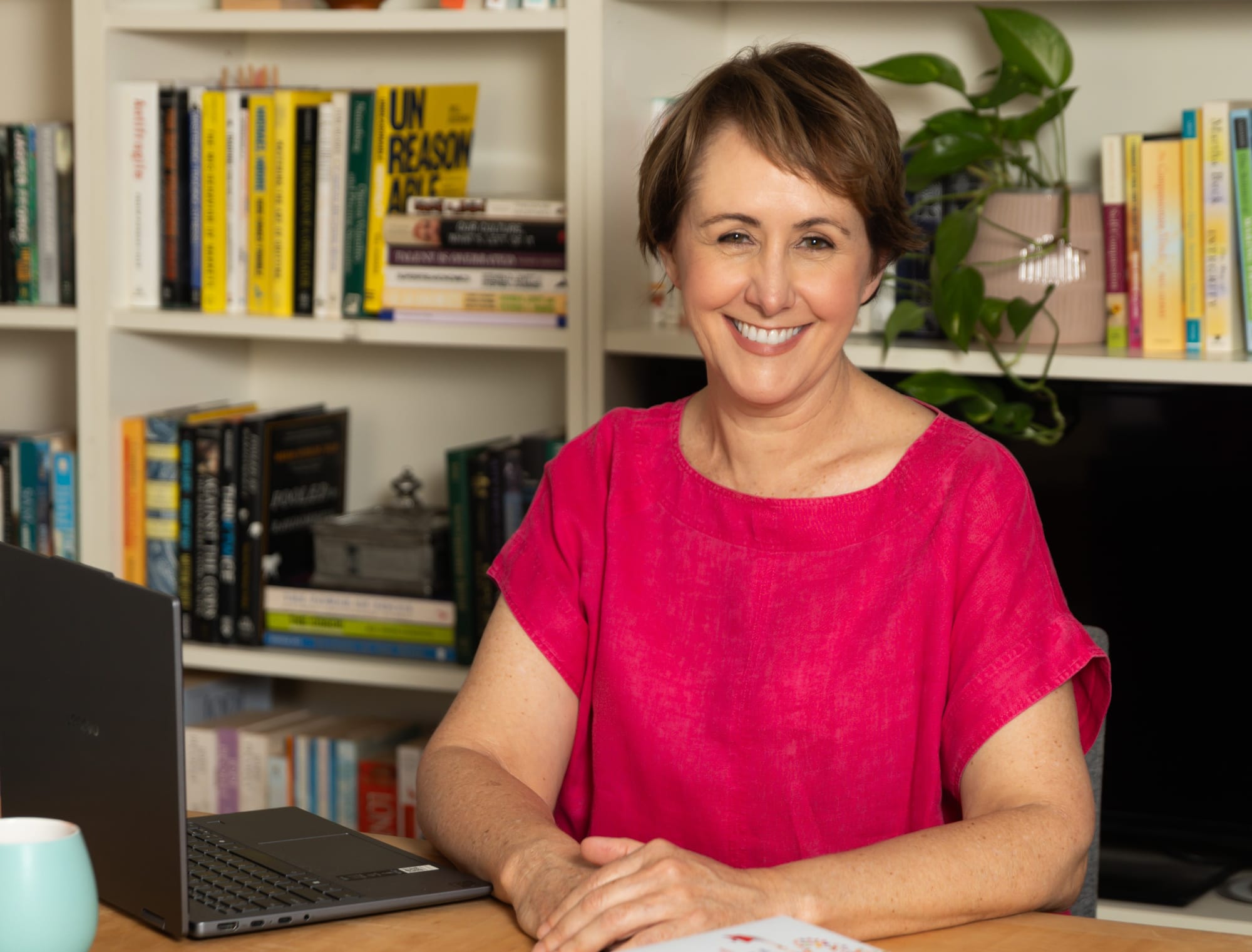
Seeing the difficulties they face day to day led me to interview Dr Janelle Booker, a Perth-based psychologist who specialises in ADHD and the Highly Sensitive Person (HSP) trait. I first heard Booker on The Imperfects podcast—the source of the opening excerpt—and was struck by both the depth of her knowledge and the empathy with which she spoke about ADHD. Booker has worked with hundreds of patients, and much of her insight is drawn directly from clinical practice and the lived experiences of her clients.
Despite its name, Attention Deficit Hyperactivity Disorder is not simply about a lack of attention. As Booker explains, ADHD is more accurately understood as a difficulty with regulating attention and other executive functions, such as organisation, time management and emotional regulation. In the right conditions, people with ADHD can focus deeply and show high levels of creativity and problem-solving ability, but everyday tasks that rely on structure and routine can be far more challenging.
In the following interview, Booker discusses some of the most persistent misconceptions about ADHD, how it can present differently from person to person, why so many adults, especially women, go undiagnosed for years and what a diagnosis can change. She also reflects on the barriers people still face when seeking assessment and the kinds of support that can help ADHDers better understand themselves and thrive.
Is ADHD solely genetic, or is it impacted by your environment or upbringing? Does trauma have an impact?
There are twin studies, which are the gold standard of determining whether environment and upbringing have an impact, showing that children with ADHD can be brought up in different environments, and still present symptoms of ADHD. It is a genetic condition primarily, and is a difference in how the brain is structured. An ADHDer can suffer from trauma like anybody else, but it is often the [correlation] rather than causation of worsening symptoms.
How does ADHD present differently for men, women, boys and girls? Are there some telltale signs or symptoms that caregivers, friends and communities can look out for?
The first thing that I want to say about that is there seems to be a bit of a misperception at the moment, in popular culture, that [ADHD] presents differently in girls from boys. And that's why girls were never picked up, because boys have the hyperactive type and girls don't.
And that's too simplistic, because there's so many boys who got missed as well. And so I think it's more to the point . . . that it's going to show up differently in everybody. It used to be really obvious if someone was setting fire to things or falling off their chair or being very, very disruptive like that, and they were a boy. So yes, there's all that stereotype stuff. But that's probably just the tip of the iceberg, and the majority of ADHDers who were getting diagnosed as adults, it was never suspected that they had ADHD. So it's not as easy as saying that it shows up differently in men and women or boys and girls. However, having said that, hyperactivity in a boy at school might show up differently to hyperactivity in a girl in school. So girls will often get on their reports . . . “talks too much, distracts others, doesn't share the attention”, or whatever it is. So girls will oftentimes be hyperactive in their talking, whereas boys might be more hyperactive in not being able to keep their hands to themselves or that sort of thing. And who knows why that is—whether that's socialisation or what's acceptable for boys and girls—I don't know. That's a complex question.
Yeah, for sure—it does seem like putting too much of a box around each gender. I might be a bit biased, though, because three of my friends (all women in their thirties) have recently been diagnosed. It’s super interesting because one is very talkative, while the others are not; their hyperactivity seems more internalised. So even in that small microcosm of women in their thirties that I know, it varies so much.
It varies so much, and that’s important to get across, because that point is often missed. It’s great that we’re talking about it, but it’s not that helpful to say, “this is what it looks like in men, and this is what it looks like in women,” because no two brains are the same.
There's this recent study that came out of Edinburgh that identified 174 genes within 49 gene regions that seem to be common for ADHD and dyslexic brains, bodies, people, that are distinct from other neurotypes. This is just emerging. This is just one study that's looked at genetics . . . but there is some suggestion that the more of those genes you have, the more severe the ADHD. But amongst those 174 genes (and there might be 101,000 genes—we don’t know), we don’t know which ones are responsible for what behaviours, and [which are responsible for] neurological strengths or challenges.
I don't know what the proportions are in terms of how many are really severe, and the really severe cases of ADHD might be the ones who end up falling foul of the law or in addiction. We don't know.
There's not enough known about it in terms of adults and all of that sort of nuance. But there's just an amazing variety within brains—like brains are just too hard to categorise. However, having said that, what are some things that you could look out for? Do you want me to say for children or for adults?
Yeah, of course. We know more about kids and maybe less about adults. I would like to focus more on adults.
You might be looking out for . . . disorganisation in terms of punctuality or remembering appointments, et cetera. Disorganisation in terms of managing spaces, so cluttered houses, cars, that sort of thing. Those sorts of things can be very, very hard for ADHDer brains. It's quite rare for a woman to have a really messy house, whereas it might be more common for a man to have a really, (like a young man anyway), to have a really messy house because the expectations on them are different.
But for women, the sort of moral imperative is to be neat, tidy, organised, punctual, you know, emotionally regulated, and they are all the things that ADHD women will tend to struggle with. So, they’re pretty obvious, even if they're behind the scenes. Maybe that person is not showing that side [in public].
Having said that, nothing is simple Catherine because maybe the most organised person you know will be an ADHDer as well as the least organised person because some people overcompensate by being very, very regimented and having lots and lots of lists.
So it is kind of like it's over the top for them. They're having to work so hard to organise things and so hard having multiple reminders so that they don't forget something. So either it's all falling apart a little bit or it comes and goes. Sometimes they're on top of it and sometimes it's all quite chaotic . . . or they're having to use a lot of energy just to keep on top of the things that come quite naturally to other people.
Does that make sense to you?
[This is called ‘masking.’ Masking refers to when people with ADHD try to hide their symptoms in order to fit in or be more socially accepted.]
Yes. Yeah. So unless you were very close to someone, maybe you wouldn't notice it at all.
Yeah, that's right. And that's if executive function is the thing that they struggle with. So they’re aspects of executive function—the brain's capacity to regulate itself, including attention and task initiation, et cetera.
Another thing, so within a friendship you'd notice the ones who don't answer texts, you know? Or say that they're gonna do something and they don't do it. Those sorts of things can often be [a sign of] ADHD, because they forget or because they become overwhelmed by everything. And if you don't have the capacity to organise, prioritise, plan efficiently and keep track of time—if all of those things are difficult—then just the basic things of keeping in touch with friends is really hard.
And then on top of that, they will be more likely to be perfectionistic, very, very shame-prone and don't like making mistakes. So they're working really, really hard all the time to try not to make mistakes, not let people down. So it's heartbreaking to realise how much time and effort an ADHDer is putting into not letting you down.
Yeah. That makes sense.
Yeah. Not letting you down. Not letting the boss down, not upsetting, you know, the partner or the mother or everybody. It's exhausting.
So women, women will show up in those ways because societally a woman's domain is to be organised and have everything smooth without breaking a sweat. That's on us. That's our job in the way that things work. Whereas men get to sort of do whatever they do and then not be across everything, generally speaking.
So how does it present in men? In men, it will often present as unmet potential. So really, really smart, but somehow just couldn't get through uni. That's the same with women too but [they] maybe started five uni degrees and have not finished any of them. [Where as a man with ADHD] is working as a truck driver when really their IQ is at like 150 or something like that. This again is being too generalised because it could go either way [for both parties].
But we do forgive men for being messy in ways we don't forgive women for being messy. We forgive men for losing their temper in ways that women do not get forgiven if they lose their temper. Their emotions might be all over the place. They might be having difficulty regulating their sleep, so maybe they’re just a bit of a disaster—which is, you know, cute and acceptable when they're young. But as they're getting older, and they're not able to make themselves do the thing—whatever it is—then it starts to get more and more in their way and starts to affect their sense of themselves more and more.
So low self-esteem—but on both sides—very low self-esteem. Limited confidence in their ability to follow through on anything. So maybe pulling away a little bit more, not putting their hand up to do things, et cetera, because they don't know how they'll be feeling on that day. Just not having that consistent dopamine.
This is a curiosity I've found with the people that I know. Even slightly before they got a diagnosis, or any idea of going to see someone for help beyond having anxiety or depression, there was this constant self-monitoring that I see in them. I think, to a certain extent, I do that as well, but not on that same level by any means… which, yeah, is just an observation that I think you've alluded to. It seems quite a burden.
Huge. It's exhausting. It's just exhausting. And a lot of them will have difficulties regulating their sleep—so they're not sleeping as well as other people. Some of them won't fall asleep till three in the morning. They just can't. Their brain is just so wired and they have to still get up at six because that's the way the world works, you know? So it is going against what their brain naturally does, but they're having to fit into a neurotypical world.
Matilda Boseley beautifully says it in her book, The Year I Met My Brain, and she says that our society has put a moral value on all of these things—being punctual, being tidy, being, organised, et cetera. And so when you are not good at those things, you feel like a really bad person. Interrupting people—that's not very polite, that's not considerate. Forgetting things, forgetting people's birthdays, forgetting to show up to things, forgetting whatever it is. Forgetting what you have, like what you need to take all the time.
ADHDers tend to be highly intelligent. It is not that they don't know—it is that their brain just is not holding onto all this stuff. This is not what they're good at. So we've made this a moral imperative in our society—we must be good at all those things [like being punctual, tidy and organised]. But the things that ADHD brains are really good at—there's no moral imperative that we are good at those. [People say], “Oh, that surprises me. You did that so well,” [when an ADHDer solves a complex problem]. But that's the stuff that ADHD brains are cut out to do. They're the big-picture thinkers. They're the problem-solvers, the innovators, the creators. But that is not considered [important]—that's nice to have if you can. [Instead it's]: how tidy are you? How organised are you? And this has been their experience probably from the time they hit school.
Then they learn to be vigilant. Like, “I don't wanna make a mistake. I don't wanna be foolish, I don't wanna upset anyone”. And yeah, it's exhausting.
Editorial note: A research study estimated that a child with ADHD is likely to receive 20,000 more criticisms by the age of 10 than a neurotypical child. The impact of this can be far-reaching into adulthood, including having negative beliefs about society and life in general, as well as their ability and willingness to face challenges.
Moreover, it’s not uncommon for patients suspecting they may have ADHD to receive pushback from their healthcare providers when they ask to be referred for evaluation. This can deepen their own negative view of themselves and the world around them.
The occurrence of push-back from medical professionals when patients come forward asking for an appointment with a psychiatrist is common. Anxiety and depression are common side kicks to ADHD (a staggering statistic is that 80 percent of ADHDers, also struggle with Anxiety and Depression), so often getting referred for a full diagnosis is difficult.
I’ve had two friends struggle to receive a diagnosis through the medical system. They were kind of fobbed off as having anxiety and depression for quite a long time. Have any of your clients struggled to reach a diagnosis through the medical system? What barriers, in terms of knowledge or understanding of ADHD in the medical system, still persist today?
I think it's got a lot better. So that's the good news, Catherine, because 10 years ago, in the medical field, it was not recognised that many women are ADHDers, so we've come a long way.
However, yes—traditionally, especially for women, but also for many men—the first thought of a psychologist, psychiatrist, or GP is depression and anxiety: “Let’s treat that first.” Many people go to a psychiatrist for an ADHD assessment and are told, “But anxiety is probably more of a problem. Let’s deal with that first.”
I had one client [for] whom that went on for 15 years, okay. And then once he finally found a psychiatrist who would treat the ADHD, the anxiety went away and the mood was fine. So it's very frustrating. So that can happen.
Some people will also get misdiagnosed with bipolar disorder, so hopefully that's not happening anymore. The medications to treat anxiety, depression and bipolar are pretty serious medications, and so if you don't need to take those, it's much better. So that is a barrier, but hopefully it's becoming less so.
One barrier at the moment, I think, is that people are going, “Oh, everyone has ADHD. Don't tell me you think you've got ADHD.” So there's a lot of eye-rolling at the moment. Even when you go and see the GP and you say, “Can I have a referral to see a psychiatrist?” [The GP says], “Oh! Everyone has ADHD at the moment.” And [for] someone who's a sensitive soul (most ADHDers are very sensitive souls), that's crushing as well.
It's like, “Oh, you don't believe me either, now I've gotta try to keep you happy so that you are not against me.” That's unnecessary. So even people who should know better are having this response to people: “Oh, everybody thinks they have ADHD these days!” So that's a barrier.
But I guess the two greatest barriers are, number one, money. [Receiving care from a psychiatrist] is extremely expensive. In that first 12 months, you might have to have six or seven appointments because they've gotta try and fine-tune the medication. So money is number one. And the second one is availability. Access to a psychiatrist is another one.
Yeah, that seems to be similar here. I did look into it, and even the ADHD Association of New Zealand has a budgeting tool on their website and talks about getting financial support—for example, asking, “Can you talk to your family about somehow getting the money together?” At least for one friend who had been waiting a long time and decided to go privately, it was quite a financial burden, but she did get help from her parents.
Yeah. And over here in Australia, there's no public service—you have to be going privately. There's no option. So unless you have the means, you do not have access, which is really hard. That's really hard.
It needs to be addressed. And over here, I'm in Western Australia. We've just recently had a state election, and the government who was in and has been reelected said that if they were reelected, they would work to make GPs able to assess and treat ADHD—which got me to vote for them. But I don’t know whether that's possible or not. I'm not sure whether that's possible, but at least it's on the agenda—the affordability of it.
Editorial note: Since this interview was conducted, Western Australia has begun rolling out reforms to train GPs to diagnose and treat ADHD. The first cohort commenced training in late 2025, with a total of 65 GPs expected to complete the program by August 2026. Once trained, these GPs will be able to diagnose ADHD and initiate treatment, with services being introduced progressively as training is completed.
In New Zealand, regulatory changes that came into effect on February 1, 2026, now allow vocationally registered GPs and nurse practitioners to diagnose ADHD in adults and initiate treatment without requiring prior specialist approval. These changes are intended to improve access to care and reduce wait times, although uptake is expected to be gradual as clinicians develop expertise and services expand.
What is the impact of receiving a diagnosis on a patient? How do they see themselves and life after receiving a diagnosis?
Yeah, it's individual. I'm getting goosebumps. This is the term people use with me—not everyone, but a lot of people say—“this has been life-changing” because they then get to review their life. And this is an emotional journey. They get to review their life with new information. So it's like looking through another lens—a different lens, a kinder, more compassionate lens.
It's really, really emotional for a lot of people. So it is really common to go through a progression of emotions, emotional responses, and that, depending on the person, might be short-lived or it might linger. And it's really good for them to be able to talk about those with somebody—other ADHDers are great, if not that, you know, a loved one and if not, a therapist who's familiar with the space.
Some of the common reactions: relief is the first one because a lot of them fear that they will not be believed by the psychiatrist. They also fear that if it's not ADHD, then it turns out, “I am dumb or I am lazy—just like I thought all along that maybe I am just lazy.”
So it is a relief: “Oh, there is a reason for all of these struggles that I've had.” And then that can turn into a little bit of hopelessness because “oh, well that means that will never change—like this is just who I am.” So a lot of people are hoping that if it is just depression or it is anxiety, “I'll get on top of that and then life will be easier.” So a lot of times it's like, “okay, so this is what I'm gonna be dealing with for the rest of my life.” But not everyone goes there.
And then what can come up is anger: “So why didn't anyone pick this up? Why did I have to struggle so much?” And so there can be some anger, and that's really, really normal. That's really good to be able to talk about and just validate—yeah, of course there's anger there.
Let's say you've got a 45-year-old woman and she's just been diagnosed—even though she knows that, you know, 30 or 40 years ago they didn't even know that girls had it, and that nobody really would've known—but even still, there's that anger, like, “I should not have suffered what I've suffered.”
And there can be a lot of grief—a lot of sadness about what could have been: “Had my struggles been recognised early and I'd been understood, supported and encouraged, then all of the failure, all of the self-criticism, all of the self-loathing—I wouldn't have had that, and I would've just been able to think clearly, get stuff done, and my life could have been so different.” And that is a really common one.
There's another part of that too. The other part of grief is: “Had I not had to mask who I really am all these years, my life could have been really different.” You know, because they have to pretend that they're neurotypical to fit in—which means that they have to cut off from really crucial, important parts of who they really are, and so they can [have] grief around that as well.
Yeah, just thinking about that, I can imagine if you're in your forties or fifties or sixties, and then you're like, well… why did I have to hide myself? Or, um, what if other people had understood this so much better? Would I have been treated differently? Would I have been respected more? What would I have been willing to do if I had the right support? All sorts of things.
Yeah. It's huge. So for some people that's a journey that they will take in the months, maybe even a year afterwards. So it's a re-evaluating and reprocessing of “my life so far.” Which will maybe come in dribs and drabs. It's really common for ADHDers to be unsuccessful at university. It doesn't matter how smart they are or how motivated they are, it's just not a great environment. It's really common [that] they falter at uni.
So they might have started three different courses, you know, because they didn't have the support to get through. So maybe all this time they've wanted to be an architect, you know—and yet now they are doing something completely different because they just couldn't get through the course. So there's all of that as well: the loss of what their life could have been. Had it been recognised earlier, [they would have] got the medication, [the] support and understanding, and [been able] to believe in themselves and trust themselves more.
Yeah, that's huge in the sense of self trust, I can imagine.
Oh yeah. Self-trust is huge or the second guessing. This is a huge thing. They gaslight themselves a lot.
In your ideal world, how would society and communities act differently to cater to neurodiversity—in this case, people with ADHD?
I love this question! Yeah, I think about it quite a lot.
I think ideally there would be a separate schooling system for ADHDers. It would look completely different to the one that we have, and it would be much more interest-based. It would be much more about diving deeply into things, understanding them in a more complex sort of way, so they can develop deep understanding—complex understanding—about things, and where creativity, innovation and experimentation are valued and encouraged. And I think the whole of society would benefit if we did that.
So I think non-ADHD brains would really flounder in that environment. They would find that very threatening, or boring, or whatever. But ADHD brains need to be nurtured in a different way. ADHD brains do not function well sitting passively in a chair, just receiving auditory information.
We do not get the best out of our ADHDers when that's what we put them through. I mean, I don't think anyone thrives in that situation—but ADHD brains in particular. So I think education would look completely different.
I think our expectations of ADHDers would be different, just as our expectations of autistic people would be different—and our expectations of neurotypical people—because I think everybody has a part to play if society is to benefit the most from the differences. So if we see ADHD brains and autistic brains not as broken brains but as specialised brains, then society would benefit from making good use of them and nurturing autistic brains to be whatever they are. That's not my area—but detail-oriented and sort of systematic, et cetera—and they're excellent at that sort of stuff. And we've got the ADHDers who think about things in a complex, sort of innovative, creative, you know, big-picture way. And then we've got neurotypical people and the way that they sort of function. Well, that to me would be ideal.
Because ADHDers do not function well when they have to do the same thing over and over again—that's much more of a neurotypical thing. Yeah. They thrive when things are complex, when they're novel, new, when they've never seen it before, and where they can get their hands dirty and try new things and be innovative.
Yeah! Nice! What would you most like someone with ADHD to know?
I would want ADHDers to know—and this has been my mission for 10-plus years, whatever it is—I want ADHDers to know that they are not broken; that they bring amazing capacity. They have so many capacities that other people don't have. And they are perfect just the way they are, and the things that they contribute to their friends, to their colleagues, to their family are irreplaceable.
And I want them to know that they can start to let go of the expectation that they're neat and tidy and punctual, and that that is the measure of a good person. It's okay to struggle with those things, and to recognise that they struggle with them, and to not measure their worth based on things that come with so much difficulty to them—that just don't come naturally, but do come naturally to others and that other people don't even have to think about. And for them to really bring attention to what they're good at and see how they can make more of that—you know, make more time for the things that.
Yeah, absolutely. You touched on this in The Imperfects podcast as well, in terms of the empathy that ADHDers exhibit—and it's just naturally who they are. That's been the absolute experience I've had with all of my friends with ADHD. Not to say that other people are not empathetic, but it's just on a different level. I think a profound depth of really caring, or really seeing the other person, which I think can only come from that kind of intense struggle.
Yeah, I think it's just part of their brain. I think that that's just part of neurodivergent people in general. Not everyone, but there tends to be this deep empathy as part of it. Big emotions and deep empathy just seem to be neurologically how people are wired. Yeah.
We all benefit from that, but, you know, this is not your question. But then ADHDers need to learn how to corral that a little bit so they don't wear themselves out.
Yeah, talking about emotional dysregulation—ultimately it's most devastating for the person going through that because it's such highs and such lows. And I wonder if that's connected to what you were saying about empathy, because emotions seem to be felt so intensely. I can understand how that might sometimes be mistaken for bipolar, which is a more severe situation. So how do you corral those emotions, especially when, again, emotional expression may be judged differently depending on gender?
Yeah, I mean, emotions are socialised, and we are socialised, aren't we, in terms of gender and emotions? Yes. So for me, I was meaning corralling empathy. There are things that you can learn to do. You can learn to practise compassion instead of empathy, and that's a lot less exhausting and a lot more in our control. We can learn to switch to compassion. So that makes life a lot easier as the person feeling all the empathy, because otherwise it's exhausting. So you can work on that. Corral your empathy a little bit. It doesn't mean to squash it, but it just means having some boundaries around it that, you know, look after the self. Otherwise they're giving everything away to every homeless person on the street, and they're spending all night worrying about the guy that they didn't stop to pick up when the car was broken down. And it can get out of hand—empathy can get out of hand. So it is like learning to be more skilful with empathy.
Emotional regulation is considered by a very high proportion of ADHDers to be their most problematic aspect of ADHD, because that's exhausting too. I've been in a group with ADHDers—so running a group—and just saying one thing, and I could feel everybody's mood just dropping suddenly. When I say mood, I don't mean emotion. I mean everyone just suddenly plummeted down into a depressed-type mood. It was just like that. Boom! You know? That's how dysregulated their emotions are if they're not on medication.
This is where our conversation with Janelle ended. Emotional dysregulation and treatment is an emerging area of scientific research. However, initial findings have shown that receiving support with medication and cognitive behavioural therapy can improve symptom management and life outcomes.
So what if you suspect you might have ADHD?
Most people begin by taking a self-assessment test, as their symptoms have become familiar to them and it’s hard to know the criteria. Many organisations offer online self-assessment tools that ask specific questions about your life and behaviours. For example, ADHD New Zealand (also known as ADHD Association Incorporated) provides one such tool.
However, only an appropriately qualified health professional (such as a psychiatrist, paediatrician, clinical psychologist or, in some countries, a specially trained GP, nurse practitioner or multidisciplinary team) can accurately assess and diagnose ADHD and discuss treatment options. It may be worth bringing the results of a self-assessment test to your GP (or primary care doctor), particularly if you are worried about being dismissed. The assessment can provide something concrete for the GP to consider alongside your symptoms and experiences. Some GPs may have limited training in recognising the diverse presentations of ADHD.
Many organisations also offer resources for individuals, their families and loved ones, including advice and strategies on how to cope with life’s challenges. ADHD New Zealand provides a broad range of resources on how to manage in the workplace, at school, with financial budgeting, medication options and finding support both in the medical field and socially.
Another highly helpful step is to connect with other people with ADHD. It can be overwhelming to know who to trust, as ADHD has become a major topic on social media. One writer Janelle recommended was Matilda Moseley, a journalist and ADHDer. She has written two insightful books about her life after receiving her diagnosis and the strategies she uses to navigate the ups and downs of life with a neurodivergent brain. She also shares content on TikTok.
While ADHD is a complex and still somewhat difficult-to-pinpoint diagnosis, it is heartening to know that, as a society, we are getting better at recognising its presentations. However, we must continue to educate ourselves so we do not overlook the incredible qualities of innovation, creativity, and empathy that individuals with ADHD bring. Can we be more open when we see someone struggling, and not view it as an individual failing, but rather as a call for us to grow as a society and support those around us—especially so our neurodivergent or “global” thinkers can thrive in a largely linear, neurotypical world?


